

A cardiac stress test or exercise test is done when your doctor wants to see how well your heart works under stress or activity.
At New York Heart and Vascular Care (NYHVC), we make it easy to get this test. It can show blood flow problems that might not appear when your heart is resting. Visit one of our six New York offices for a clear, professional heart check without long hospital waits.

Experienced cardiac teams safely monitor your heart’s response to physical exertion to check blood flow and performance.
If you are trying to understand why your doctor ordered a cardiac stress test instead of a regular checkup, the reason is simple: we need to see how your blood vessels react when your body works harder. It is an entirely safe, controlled way to track your heart under pressure.
It is also common to get confused when looking at the options your doctor might mention for your appointment:
A standard EKG captures a quick ten-second snapshot of your heart while you lie completely flat. A treadmill stress test or stress test heart tracks the same electrical timing while your body is actively moving.
A regular echo just uses sound waves to take pictures of your heart while you sit completely still. A stress echocardiogram is different because it adds exercise to the mix, taking live ultrasound videos of your heart muscle right before and right after your heart rate goes up on the treadmill.
Getting a cardiac testing near me at our private offices ensures you get high-quality diagnostic data without the overwhelming atmosphere of a giant hospital lab.
Our doctors use this test to check your arteries and spot warning signs before things turn into an emergency. Coming to our private clinic means you bypass long hospital wait lists and get clear, immediate answers about your exercise stress test.
We use the treadmill tracking to see if your chest tightness or pressure is caused by narrowed heart arteries.
If you get unusually winded or tired just walking up a flight of stairs, this test helps us check if your heart is the reason.
The test helps us look for hidden signs of blocked blood flow that do not show up during a normal, resting evaluation.
If you are already taking heart medicines or recently had a procedure, the test shows us exactly how well your treatment is working.
If you need a different, non-heart surgery soon, we use this data to ensure your heart is strong enough to handle the stress of the procedure.
If you want to start a new workout routine but have a family history of heart disease, we make sure it is completely safe for you to start pushing your heart.
Every patient has completely different health levels, which is why our expert care team offers a few different ways to check your heart under stress.
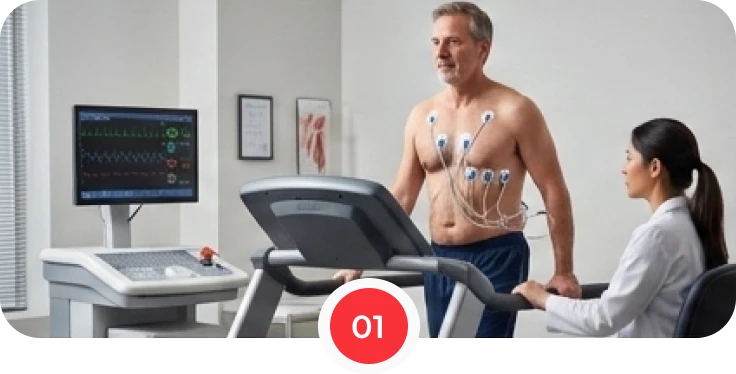
This is the standard version most people get. For a treadmill stress test, we place sticky sensors on your chest and have you walk on a standard treadmill. The machine starts out very slow and flat. Every three minutes, the speed and the uphill angle increase slightly. We watch your vitals closely the entire time to see how your body responds to the extra work.
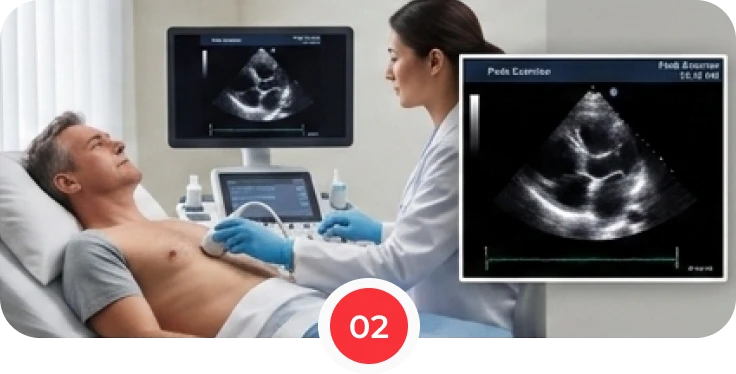
This version combines the treadmill walk with advanced ultrasound imaging. We take video images of your heart valves and chambers while you are resting, and then we take the exact same images the moment you step off the treadmill. This lets our doctors visually compare how your heart walls move when resting versus when working hard.
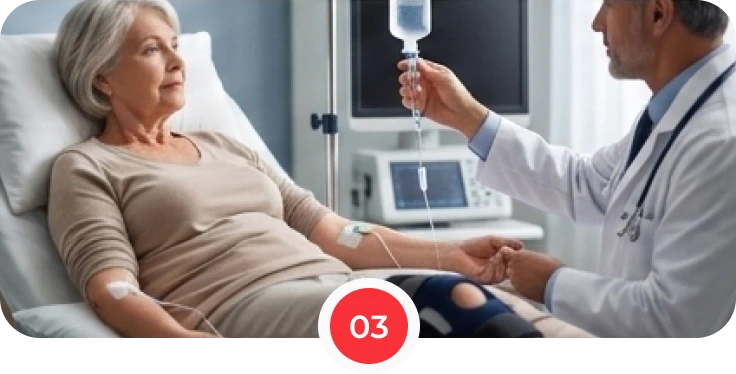
In case you have severe knee pain or back issues that make it impossible or hard for you to walk on the treadmill, that’s okay. Our team is there for you. Our experts give you the specific medicine through an IV line instead. The purpose of the medicine is to make your heart beat faster, simulating the same effects as exercise, while you relax comfortably on our exam bed.
Before you visit any of our six clinics, there are some important safety measures to follow. These are simple steps, but they ensure the equipment works perfectly and your heart stress test results are completely accurate.
This is the one most people get. We put a little gel on your chest and move a small wand around to see your heart. It doesn’t hurt at all, and it only takes a few minutes to finish.
Talk to your doctor about your daily prescriptions. We usually ask people to pause blood pressure pills like beta-blockers for 24 hours because those medicines actively stop your heart rate from climbing during exercise.
Skip the creams and powders on your chest the morning of your visit because your skin needs to be completely clean or the sticky recording patches will slide right off when you start sweating on the treadmill.
Wear loose, comfortable clothes and real sneakers. No boots, sandals, or heels.
If you have a very hairy chest, our team will probably shave a few small spots so the EKG stickers can make direct contact with your skin.
Don’t eat or drink anything except plain water for the four hours right before your appointment.
The setup takes longer than the actual exercise. You will spend about an hour at our clinic, but walking on the treadmill only lasts 10 to 15 minutes. Our medical staff stays right next to you for the entire procedure.
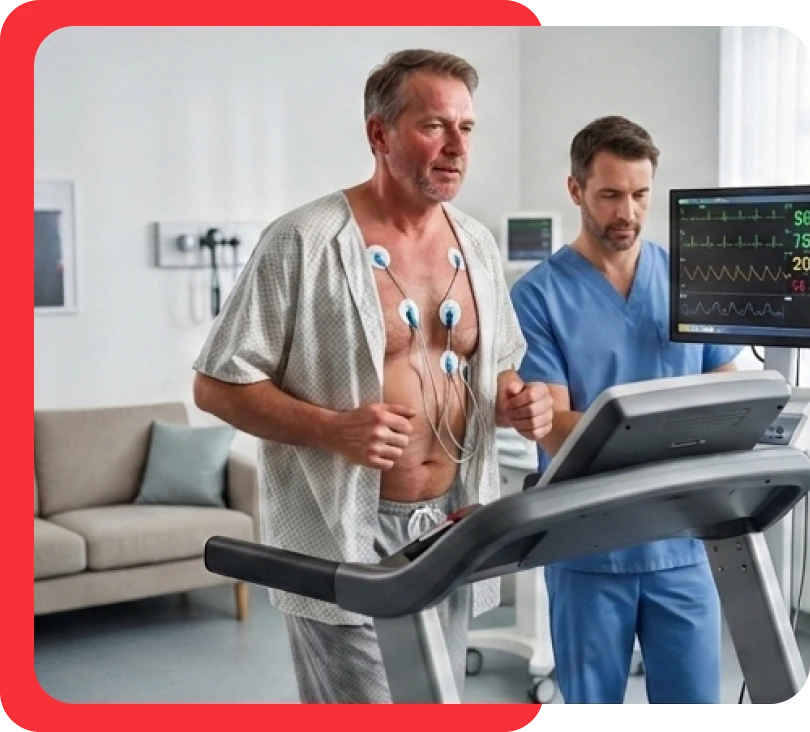
We check your resting vitals first. Then, we place sticky monitoring patches across your chest to track your rhythm.
You walk while the machine slowly goes uphill. It is normal to feel tired, sweaty, or out of breath.
Our team watches your vitals closely. We will stop the test immediately if you feel dizzy or have pain.
You lie down for 15 minutes afterward so your heart rate returns to normal. Then, you can head home.
Our main goal is to give you fast, clear answers so you don’t have to sit around worrying about your status. If you are figuring out where to get a stress test, our team is near you, with clear feedback. Our specialists review your wave data and images immediately.
If your stress test is normal, it means your heart muscle is receiving plenty of blood flow and your symptoms are likely coming from something else. If your results show an abnormality, our doctors create an immediate care plan to keep your health on track.
We make it easy to get expert care close to home. You can find us at any of these six locations. Pick the one nearest to you and use the link to find your way to our front door.

10-52 Liberty Ave, Brooklyn, NY 11208
Do not put off your heart care. Our team makes it super easy to book your test at our local clinics. We have six spots and offer clear, upfront prices.
A regular EKG is just a fast, ten-second picture of your heart while you lie flat on a table. That is it. A treadmill stress test is different because you walk on a treadmill while we watch your heart. It shows us how your heart works when you actually move around and exercise.
Yes, it is very safe. Our medical team stays right next to you the whole time. They watch your blood pressure and look at the heart screen. If you get too tired or feel bad, just tell us. We can stop the machine right away.
What you pay depends on your exact insurance plan. But since we have private neighborhood clinics instead of a giant hospital, our prices are way lower than big hospital labs. We keep our pricing clear so you do not get any surprise bills later.
We take most major plans in New York. This includes Aetna, Blue Cross Blue Shield, Cigna, UnitedHealthcare, 1199 SEIU, EmblemHealth/GHI, Medicare, and Medicaid.
Just call us at 347-480-5287. We have six different clinics across Brooklyn, Queens, and Long Island. Because we have so many spots, we can book you quickly at the closest office to your house.